

Five new cinereous vultures (Aegypius monachus) have been released into the wild in the Eastern Rhodopes as part of efforts to restore the species in the region.
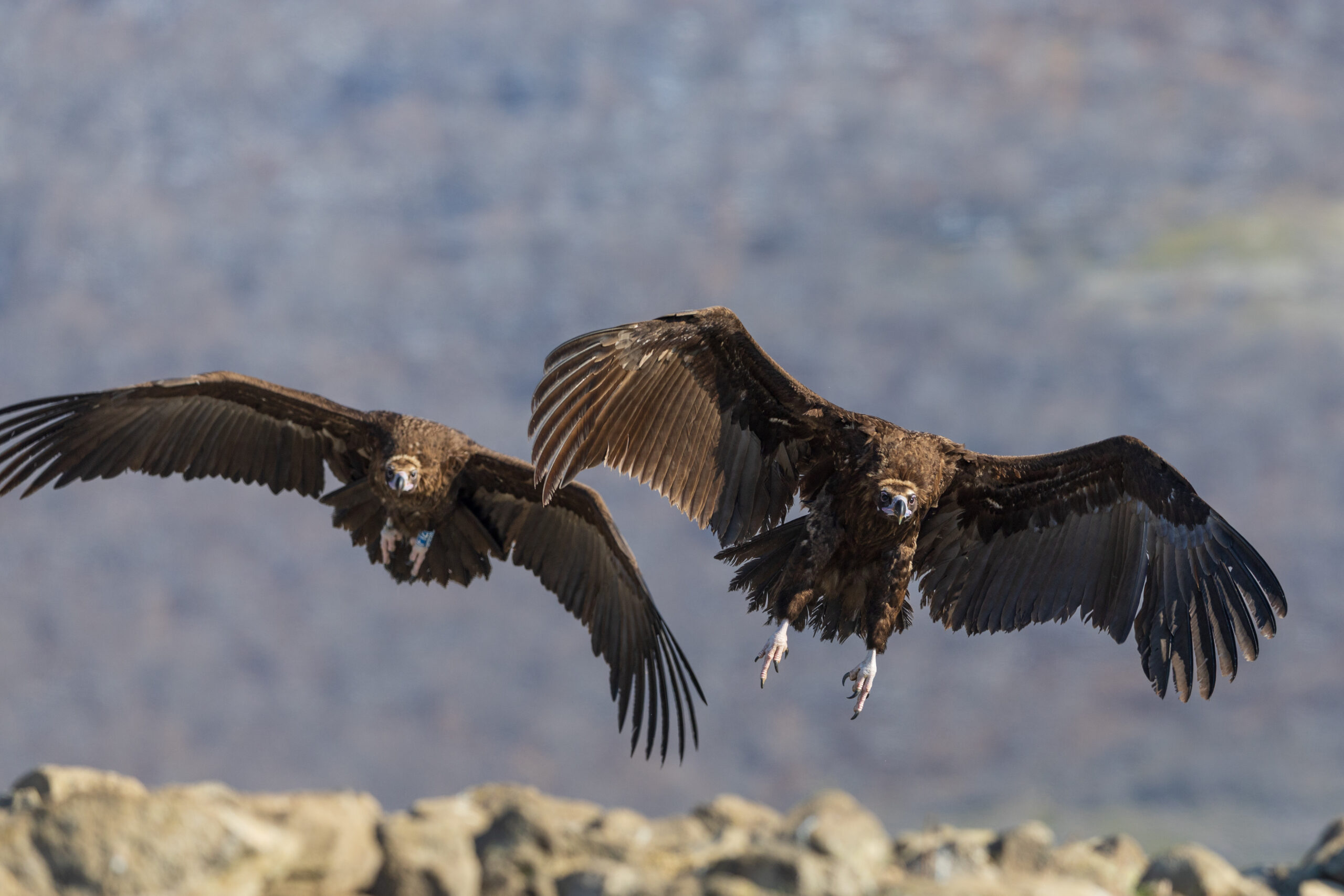
The release was carried out by teams from the Bulgarian Society for the Protection of Birds (BSPB) and the Rewilding Rhodopes Foundation. With this latest release, the total number of birds released has reached 45.
The birds are released gradually to minimise stress and give them time to acclimatise to their new surroundings. The aviary is opened carefully, and food is provided nearby to help them adjust during the initial period. The vultures arrived in the Eastern Rhodopes in May after being transferred from the partner centre of the Spanish non-governmental organisation GREFA (Grupo de Rehabilitación de la Fauna Autóctona), where they had been raised and rehabilitated. Before their release, the birds were fitted with GPS transmitters, allowing specialists to track their movements and monitor their daily adaptation to life in the wild.
“Each bird is individually tagged, enabling us to collect important information about its life in its natural habitat,” says Dr Dobromir Dobrev, project leader at BSPB.
Monitoring of vultures released earlier offers reasons for optimism. Twenty birds have survived and continue to inhabit the area, while seven have already taken up nests. Some have formed pairs with other released vultures, while others have formed mixed pairs with birds from Greece. The cinereous vultures find food both at specially established feeding sites and elsewhere, and they often join groups of griffon vultures in the area.
The main area explored by the released birds encompasses the Eastern Rhodopes and neighbouring Sakar. Some individuals, however, have travelled considerable distances, visiting Serbia, Bosnia and Herzegovina, Ukraine, Romania, Greece, Albania and North Macedonia. Despite these long journeys, they spend most of their time close to their release site — a sign that they are adapting successfully to their new environment.
Efforts to restore the species will continue, with further releases planned through 2029. The team hopes that successful adaptation and pair formation will lead to an increase in the number of breeding cinereous vultures in the coming years.
 The activities are part of the LIFE project “The Return of the Cinereous Vulture to the Rhodopes”, implemented in Bulgaria by the Bulgarian Society for the Protection of Birds in partnership with the Rewilding Rhodopes Foundation. Project No. 101148254 — LIFE23-NAT-BG-LIFE Rhodope Vulture is co-funded by the European Union’s LIFE Programme and Rewilding Europe. The cinereous vultures have been provided by the Spanish organisation GREFA, which works to rescue and rehabilitate injured wild birds.
