
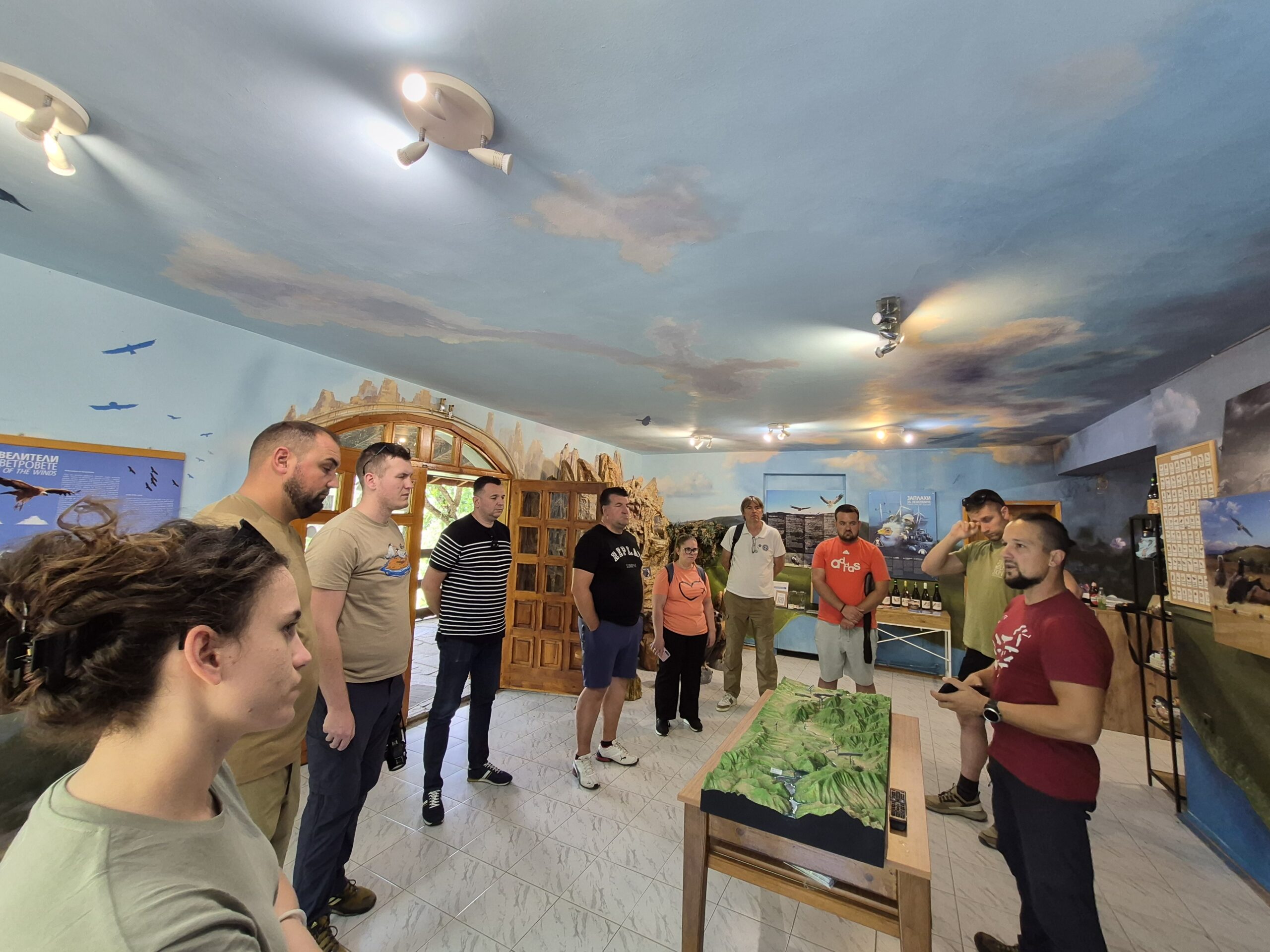
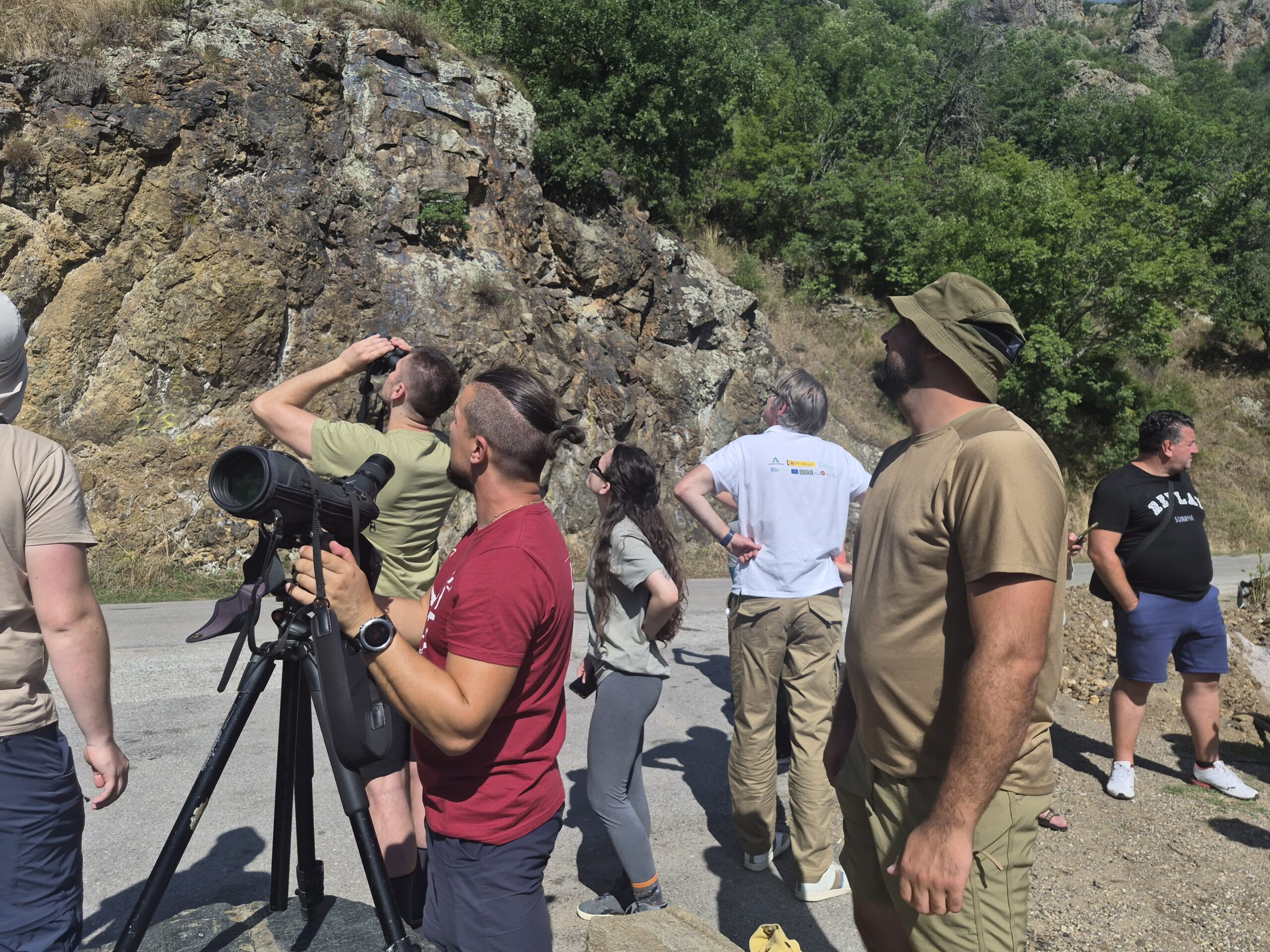
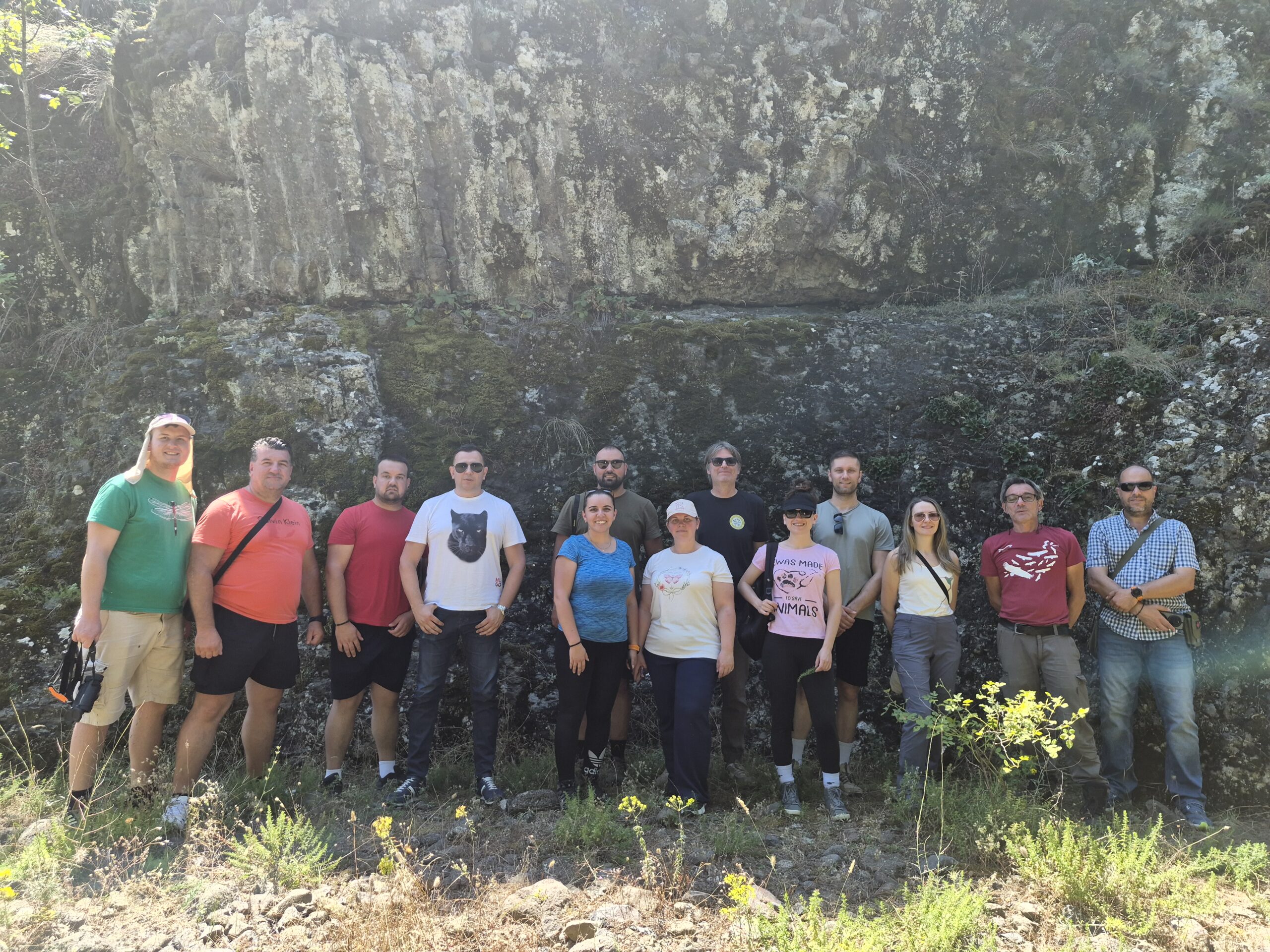
From 13 to 16 July, the Macedonian Ecological Society (MES) organized a study visit to the Eastern Rhodopes in Bulgaria as part of its project “Study Visit to the Vulture Reintroduction Center in Eastern Rhodopes.
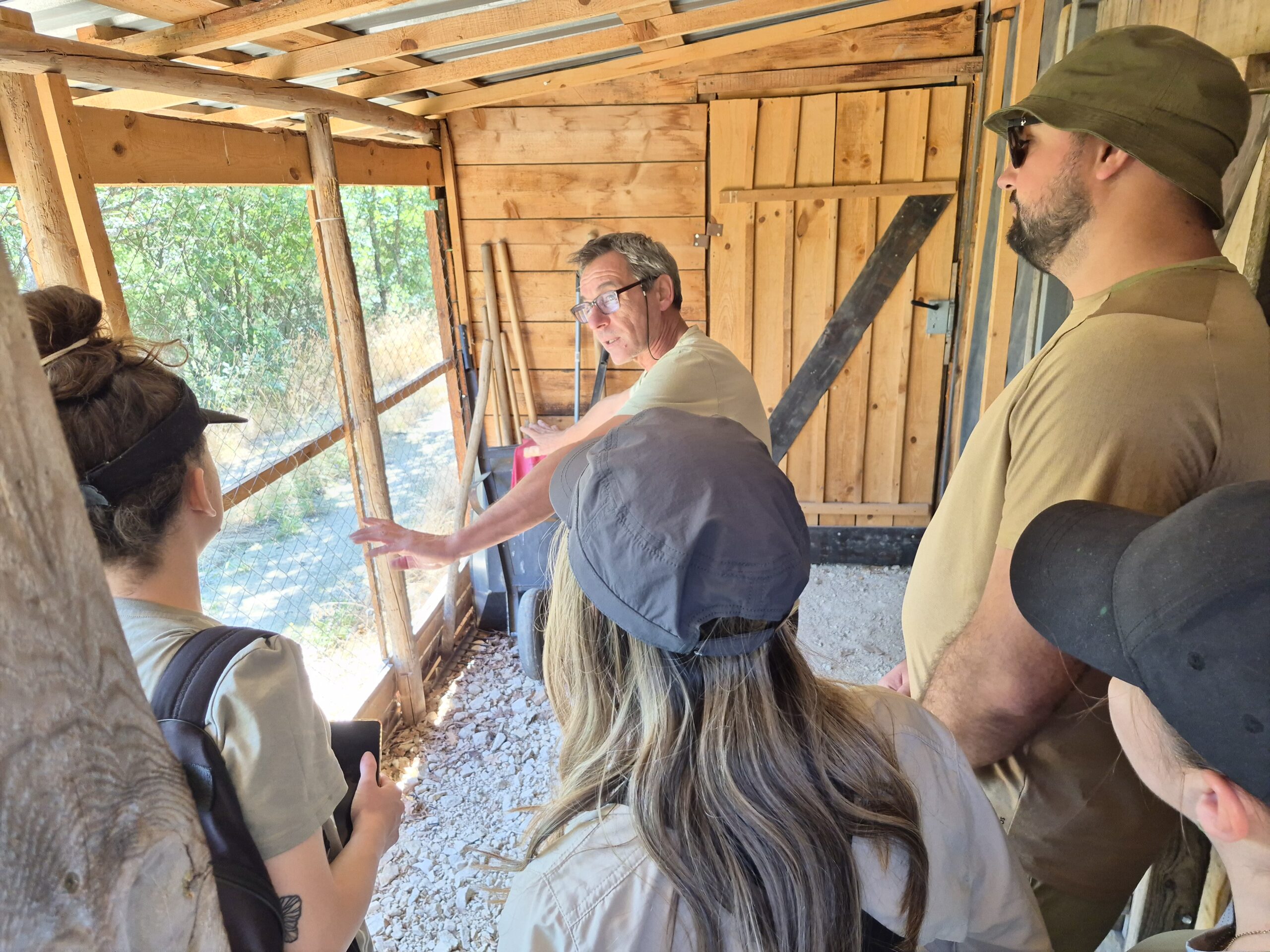
The study visit brought together representatives from North Macedonia, including the State Environmental Inspectorate (DIZS), the Food and Veterinary Agency, the Faculty of Veterinary Medicine in Skopje, and the Municipality of Demir Kapija. The participants visited the Nature Conservation Centre in Madzharovo and two acclimatisation aviaries in Madzharovo and Studen Kladenets. The first aviary hosts Cinereous and Griffon Vultures, while the second is dedicated exclusively to Egyptian Vultures.
During the visit, the participants gained valuable first-hand insight into the restoration of the Cinereous Vulture population in the Eastern Rhodopes. The Bulgarian project team, who hosted the meeting, shared their experience in establishing and managing acclimatisation aviaries and supplementary feeding sites.
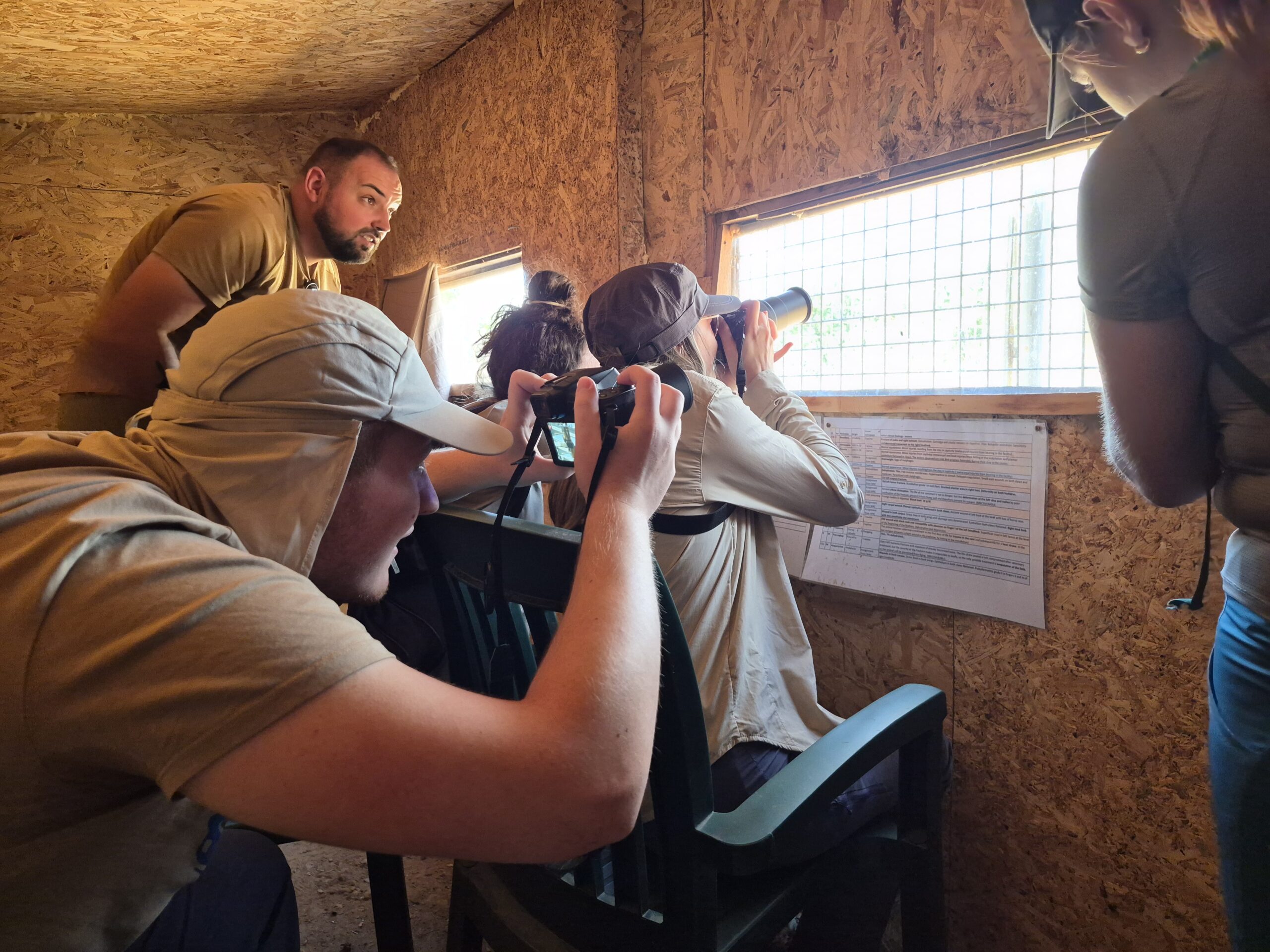
The programme also focused on some of the key challenges and approaches in vulture conservation. The participants learned about the requirements and best practices for vulture feeding sites and the legal requirements related to the use of animal by-products (ABPs) for supplementary feeding. The visit also highlighted the importance of cooperation with public authorities and institutional coordination in conservation activities.
An important part of the programme was dedicated to cooperation with local stakeholders. The participants discussed good practices for engaging local communities, building institutional partnerships, and promoting coexistence with vultures. They also explored the role of cooperation with hunting associations in supporting the recovery of wild herbivore populations and promoting the use of lead-free ammunition.
The study visit also addressed the broader social and economic dimensions of nature conservation. Through a presentation and discussion on nature-based business in the Rhodope Mountains, participants explored opportunities for creating sustainable economic activities that can support both local communities and biodiversity conservation.
The programme also included a visit to the Green Balkans Wildlife Rescue Centre in Stara Zagora, where injured and endangered wild animals receive specialized care and rehabilitation. The visit provided an opportunity to learn more about the role of wildlife rescue centers in the conservation of endangered species and the importance of specialized care for wildlife.
The knowledge, practical experience and good practices shared during the study visit will provide valuable support for the implementation of the MES nature conservation projects and its efforts to restore the Griffon Vulture population in North Macedonia. The visit also reaffirmed the importance of cross-border cooperation, knowledge exchange and working together with institutions, local communities, and other stakeholders to achieve lasting results for nature conservation.
The visit was held in the frame of Replication Action “Study visits and knowledge exchange for institutional capacity building in vulture conservation and reintroduction”, implemented through Financial Support to Third Parties (FSTP) provided by the Bulgarian Rewilding Rhodopes Foundation through project No. 101148254 — LIFE23-NAT-BG-LIFE Rhodope Vulture, co-funded by the LIFE Programme of the European Union.
