

An exceptionally important conservation success has been recorded in the Rhodope Mountains rewilding area – three pairs of Cinereous vultures have successfully hatched chicks, marking the species’ return as a breeding bird in the Bulgarian part of the Rhodope Mountains after more than three decades of absence.
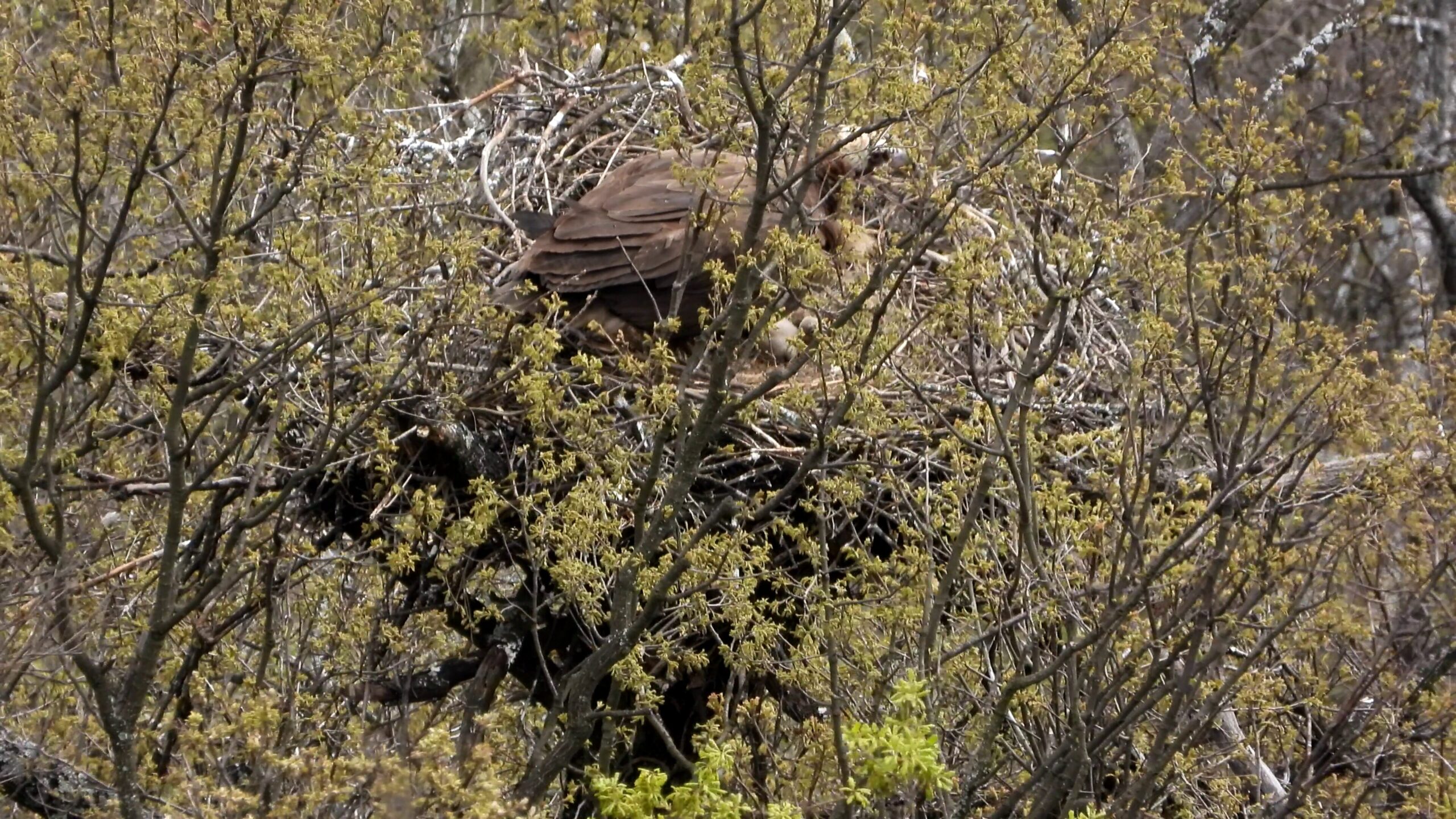
The good news was confirmed around Easter, when a monitoring team observed and documented the newly hatched chicks at the nests. The last confirmed nesting of the cinereous vulture in the region dates back to 1993, making this event historic for Bulgarian nature.
The reintroduction of the species in the area began in 2022, and so far 40 birds have been released into the wild.
“Efforts are already yielding visible results – this year, 8 pairs have been recorded in the Bulgarian part of the Eastern Rhodopes, 7 of which have occupied artificial nests built by conservation teams. Of these pairs, 4 began incubation, but only 3 were successful,” commented project leader Dr. Dobromir Dobrev.
Following the recovery of griffon vulture populations in Bulgaria, the return of the once-extinct cinereous vulture to the Rhodopes represents another major conservation achievement. The cinereous vulture is the largest vulture species found in Europe. It feeds exclusively on carrion. In addition to their vital role as nature’s “clean-up crew,” vultures are also an attractive draw for tourists visiting the Eastern Rhodopes from Bulgaria and abroad.
The reintroduction activities are carried out within the LIFE project “The Return of the Cinereous Vultures to the Rhodopes,” coordinated by the Bulgarian Society for the Protection of Birds, in partnership with local conservation organizations. The project is co-funded by the European Union’s LIFE Programme and Rewilding Europe.
