
The health of an ecosystem begins with things invisible to the naked eye. A new scientific study is revealing how the microorganisms living in the digestive systems of European bison, wild horses and deer can deepen our understanding of their health, diet and role in restoring natural processes.
Bringing back wild herbivores to the Eastern Rhodopes is about far more than the return of iconic species. It also offers scientists a rare opportunity to explore how natural ecosystems function and how animals interact with the landscapes they help to shape.
The first results were presented at the LifeWatch ERIC BEeS 2026 international conference in Plovdiv. They form part of a three-year research project led by the Faculty of Biology at Sofia University St Kliment Ohridski, with support from Bulgaria’s National Science Fund.
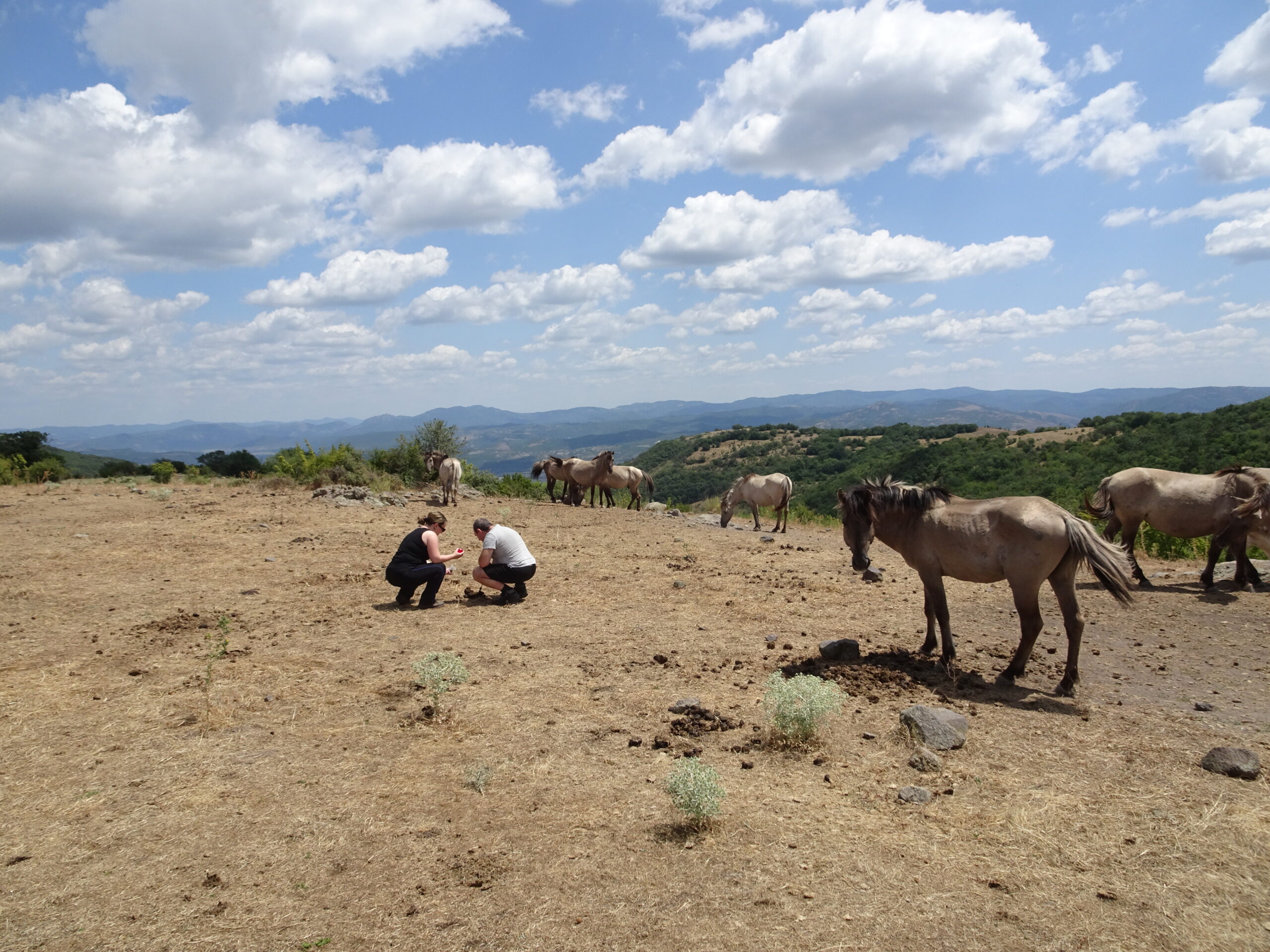
The Rewilding Rhodopes Foundation is supporting the project’s fieldwork. Samples are collected on Boynik Ridge and in the Studen Kladenets game reserve, where all four species included in the study live alongside one another: European bison, red deer, fallow deer and free-roaming Konik horses. Researchers are also collecting samples from free-ranging livestock raised using traditional practices. This allows them to compare the gut microbiomes, diets and parasite burdens of wild and domestic herbivores sharing the same pastures.
This comparative approach is one of the most compelling aspects of the project. It will help reveal how wild and domestic herbivores interact, the extent to which they exchange microorganisms and parasites, and how traditional extensive livestock grazing influences ecosystem function in the Eastern Rhodopes.
A hidden world that matters
Every herbivore carries billions of microorganisms that help break down food, influence the immune system and play an important role in its overall health. Together, these microorganisms form what is known as the gut microbiome.
The study focuses on four key species: European bison, red deer, fallow deer and wild horses. All four play an important role in restoring natural processes in the Eastern Rhodopes. Through their grazing, they help keep habitats open, limit shrub encroachment and create space for a rich diversity of plants, insects, birds and other animals.
Beyond revealing how the gut microbiomes of different species function, the project aims to show how climatic and seasonal changes influence the diet, health and adaptation of wild herbivores. Tracking these shifts will help scientists understand how recovering populations respond to increasingly frequent droughts, extreme temperatures and changes in vegetation. This knowledge will be important for managing ecosystems in a changing climate.
What are the first results telling us?
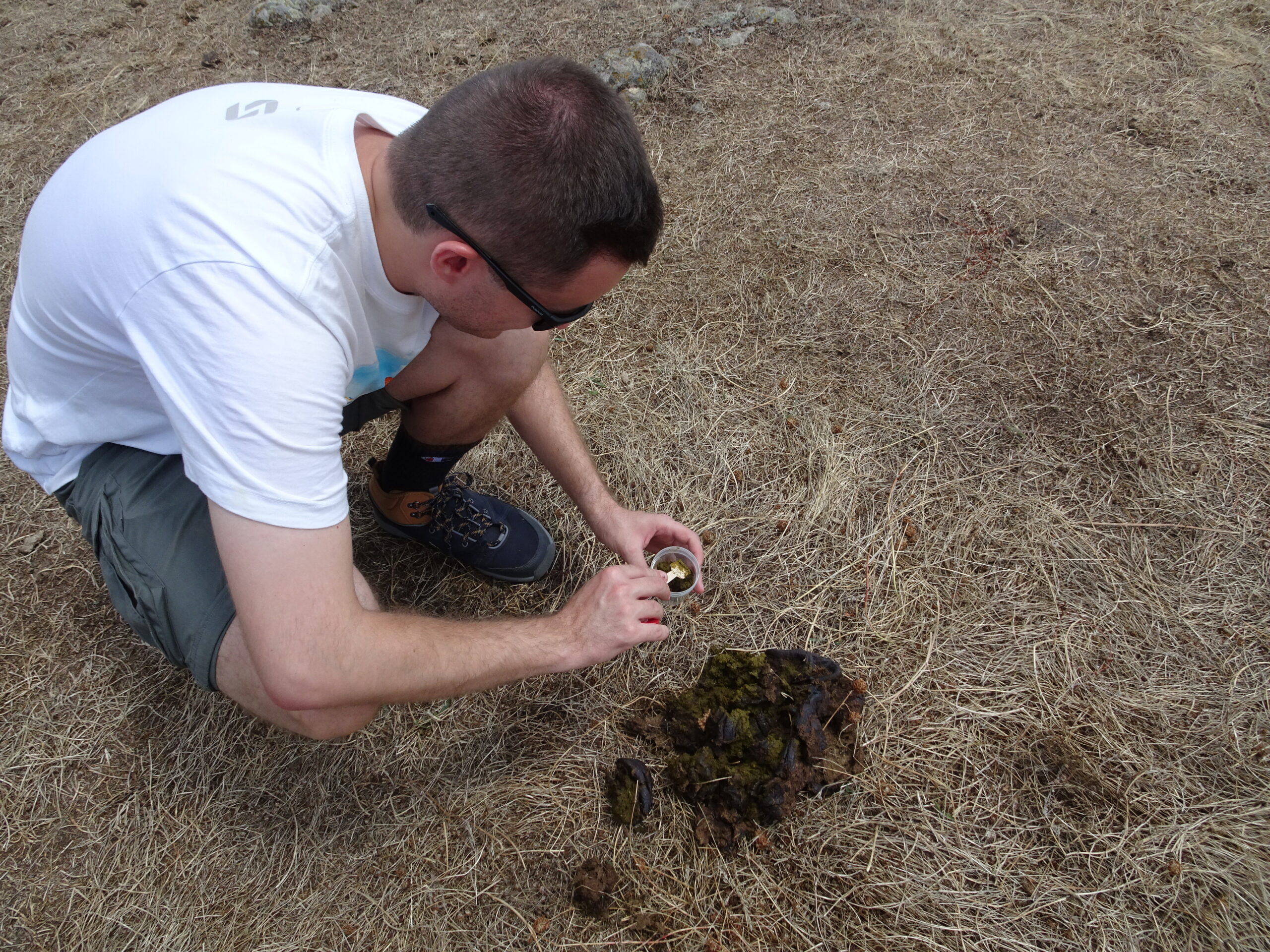
Analysis of samples collected in winter and spring shows that the composition of the gut microbiome changes markedly with the seasons. The most likely driver is diet: in spring, the animals switch to fresh vegetation, altering conditions within their digestive systems.
Scientists have already identified dozens of different microorganisms, including bacteria with potential probiotic properties and species involved in breaking down plant fibre. Some could prove valuable not only for understanding wildlife, but also for future applications in biotechnology, agriculture and veterinary medicine.
From wildlife conservation to biotechnology
One of the project’s defining features is the way it connects fundamental ecological research with practical applications.
Faecal samples contain microorganisms capable of breaking down cellulose and other hard-to-degrade plant compounds. In the future, such microorganisms could be used in biofuel production, the processing of plant waste, the food industry and veterinary medicine. Other strains may have probiotic properties, produce antimicrobial substances or help improve soil fertility.
Science supporting rewilding
The project extends far beyond microbiome research. Over the next three years, scientists will also examine the genetic diversity of the populations, seasonal changes in diet, parasites, and the relationship between animal health and habitat. The findings will help us understand how large herbivores adapt to a changing environment and how best to support the recovery of natural processes in the Eastern Rhodopes.
Climate change is creating new challenges for wild herbivores. Longer droughts, shorter periods of fresh vegetation and changes in habitat composition may affect their diet, health and distribution. The project will help reveal how these pressures are affecting the animals and how restored natural processes can make ecosystems more resilient.
Beyond individual species
Rewilding is about restoring natural processes, with large herbivores acting as key drivers of dynamic, self-regulating ecosystems. For these processes to thrive over the long term, we need to understand not only animal behaviour and population size, but also health, diet and interactions with other organisms.
The microbiome may be small and invisible, but it is a vital part of this wider picture. The more we learn about it, the better we can understand how recovering ecosystems function and how wild herbivores contribute to a wilder, more resilient and more nature-rich Rhodope landscape.
The collaboration between researchers from the Faculty of Biology at Sofia University St Kliment Ohridski and the Rewilding Rhodopes Foundation shows how rewilding can open up new opportunities for scientific discovery. Understanding this hidden world brings us one step closer to seeing how natural ecosystems really work. This is at the heart of rewilding: creating the conditions for natural processes to regain their dynamism, resilience and capacity to adapt to a changing climate.
More information about the research project is available on the official website of Sofia University’s Faculty of Biology.
