
We are pleased to announce that three project proposals have been awarded grants for the implementation of Replication Projects under the open call launched within the framework of the LIFE Rhodope Vulture project.
Together, these three Replication Projects address key objectives of the LIFE Rhodope Vulture project and represent a significant step toward transferring proven conservation approaches beyond the area of the Rhodope Mountains in Bulgaria and Greece. By supporting concrete actions in Italy, Croatia, and North Macedonia, the awarded proposals ensure the replication of successful anti-poisoning measures, development of feasibility study, and capacity-building for vulture conservation in three additional European countries. This reinforces the broader impact of the LIFE Rhodope Vulture project and contributes to coordinated, long-term conservation of vultures at a European scale.
The awarded projects are:
Anti-Poison Actions for Apennine Vultures (APAV), implemented by Rewilding Apennines (Italy), with a total budget of €6,998.
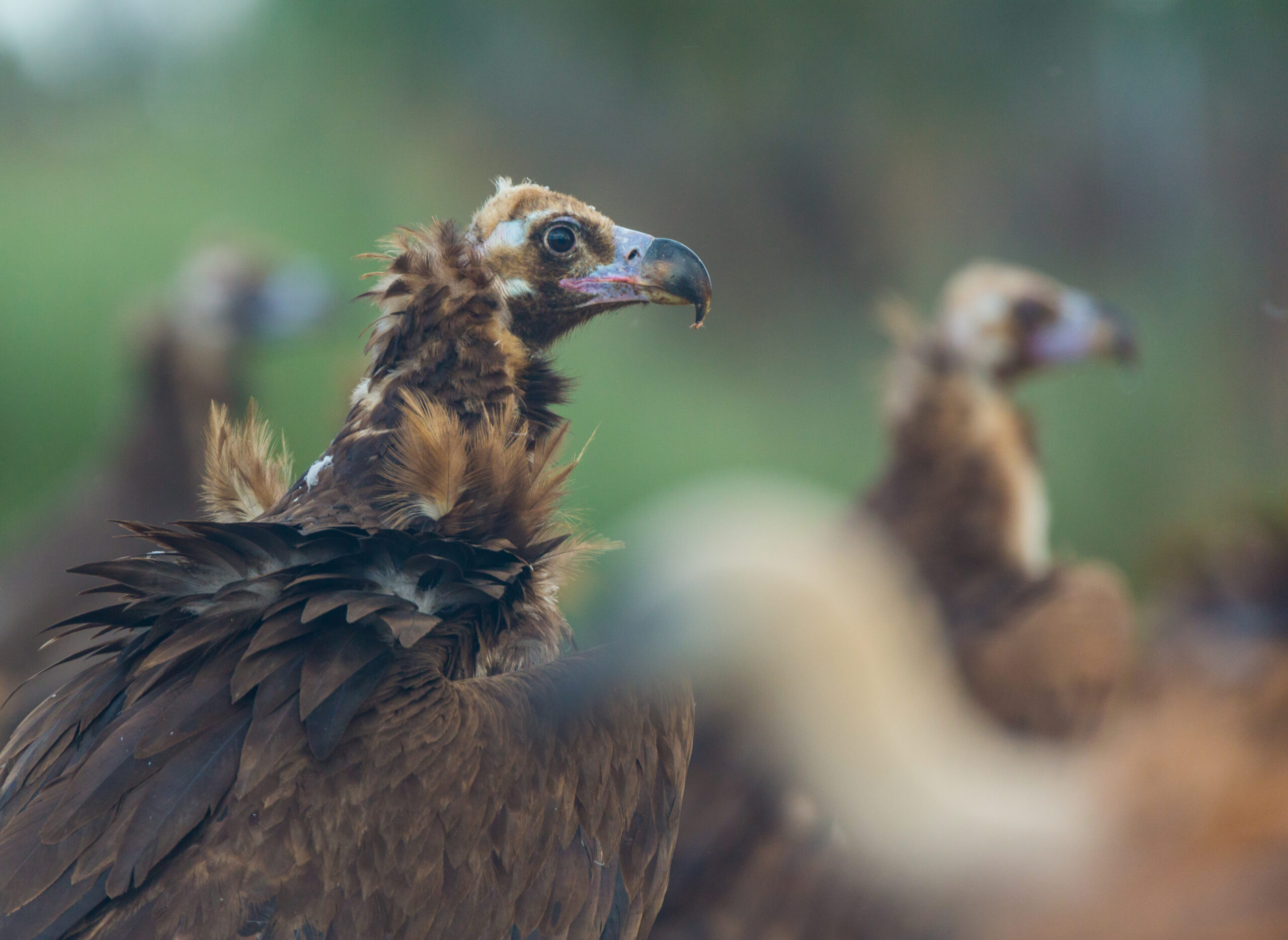
The project foresees preparatory work for the establishment of anti-poisoning dog units, monitoring of threats using vultures, and prevention of wildlife crime. Key activities include the creation, operation, and management of joint patrols involving law enforcement Forest Officers, NGOs, and hunting clubs, supported by anti-poison dog units. The project directly contributes to building and strengthening the capacity of governmental institutions and public authorities to combat poisoning incidents and to establishing clear procedures to address the illegal use of poisons in the wild. A core element of the project is the replication of the use of GPS tracking of wild and translocated Cinereous Vultures to analyze and identify poisoning events and other threats. GPS tracking has become a major tool in conservation management over recent decades and continues to expand in both technical capabilities and practical application.
Feasibility Study for the Reintroduction of the Cinereous Vulture (Aegypius monachus) in Croatia, implemented by BIOM Association (Croatia), with a total budget of €7,000.
The proposal addresses replication action 1 through the development and finalisation of a feasibility study for the reintroduction of the Cinereous Vulture in Croatia. This initiative is particularly important given that the species became extinct as a breeding bird in Croatia in the first half of the 20th century due to reduced food availability, poisoning, and habitat loss. The study will assess biological, technical, socio-economic, and other resource requirements, as well as the legal framework necessary for a potential reintroduction of the species in the country.

Study Visit to the Vulture Reintroduction Center in the Eastern Rhodopes, implemented by the Macedonian Ecological Society (North Macedonia), with a total budget of €6,929.
This project addresses the need for institutional capacity-building in North Macedonia related to vulture conservation and reintroduction. Through a study visit to the Eastern Rhodopes Reintroduction Center, participants will gain first-hand knowledge of successful vulture reintroduction practices, pre-release adaptation processes, and community engagement approaches. The visit will strengthen national readiness for future reintroduction initiatives and promote cross-border cooperation in vulture conservation.
These activities are part of the LIFE project, ” Restoration of the Cinereous vulture population and trophic chain in the Bulgarian-Greek cross-border region“,implemented on the Bulgarian side by the Bulgarian Society for the Protection of Birds in collaboration with Rewilding Rhodopes Foundation. The project (No. 101148254 — LIFE23-NAT-BG-LIFE Rhodope Vulture) is co-financed by the European Union’s LIFE program and Rewilding Europe
