
A mass poisoning incident in Dadia–Lefkimi–Soufli National Park in northeastern Greece has resulted in the death of nine Cinereous Vulture individuals, while three were found in critical condition but rescued.
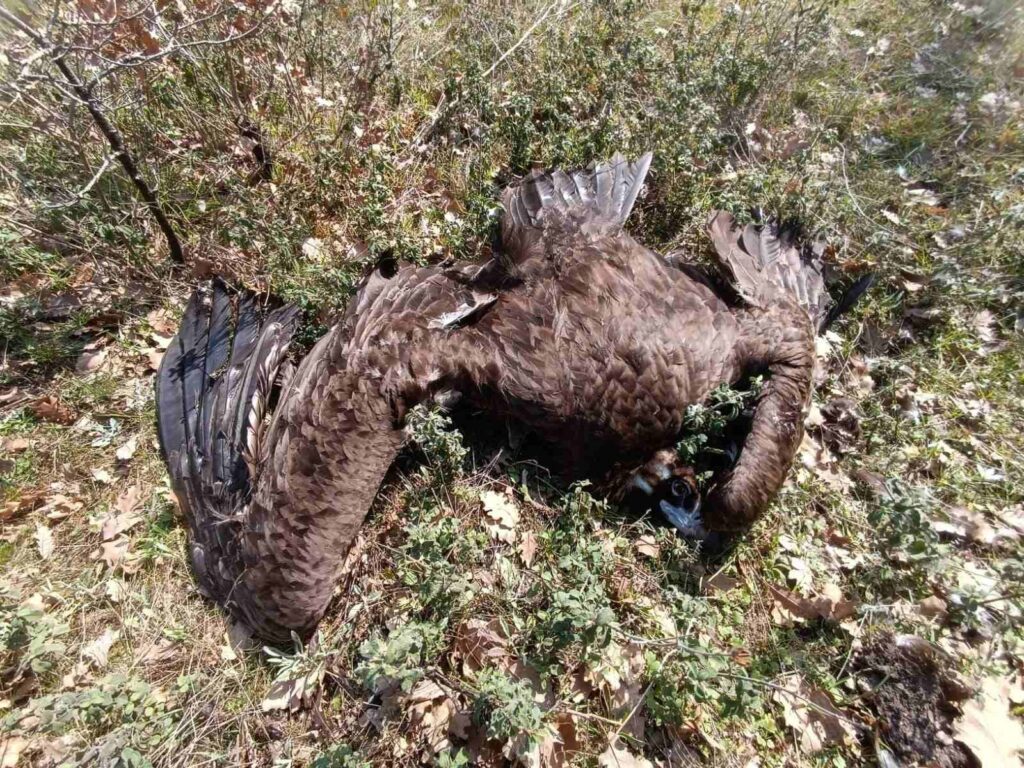 One of the victim of the poisoning incident at Dadia-Lefkimi-Soufli National Forest Park in Northeast Greece ©NECCA
Two of them have already been released back into the wild after treatment, while one is still recovering. The park hosts the only natural breeding colony of the species in the Balkans, making such incidents particularly severe and undermining decades of conservation efforts.
Victims from at least seven other species have also been recorded, including a wolf, foxes, ravens, buzzards and a Beech marten.
The first poisoned animals were discovered on March 11 by a police patrol, which found one dead and one severely injured Cinereous Vulture near a road. Conservation teams were immediately alerted and a search for poisoned baits was launched. The rescued bird had been tagged in 2016 in the Dadia area and was a confirmed breeding individual; after treatment, it successfully returned to its nest.
Additional poisoned birds were found several days later, after the Bulgarian Society for the Protection of Birds reported a problem with a Cinereous Vulture fitted with a satellite transmitter and released in the Eastern Rhodopes as part of the species reintroduction programme. Fortunately, two more poisoned but still alive vultures were located and transferred for treatment.
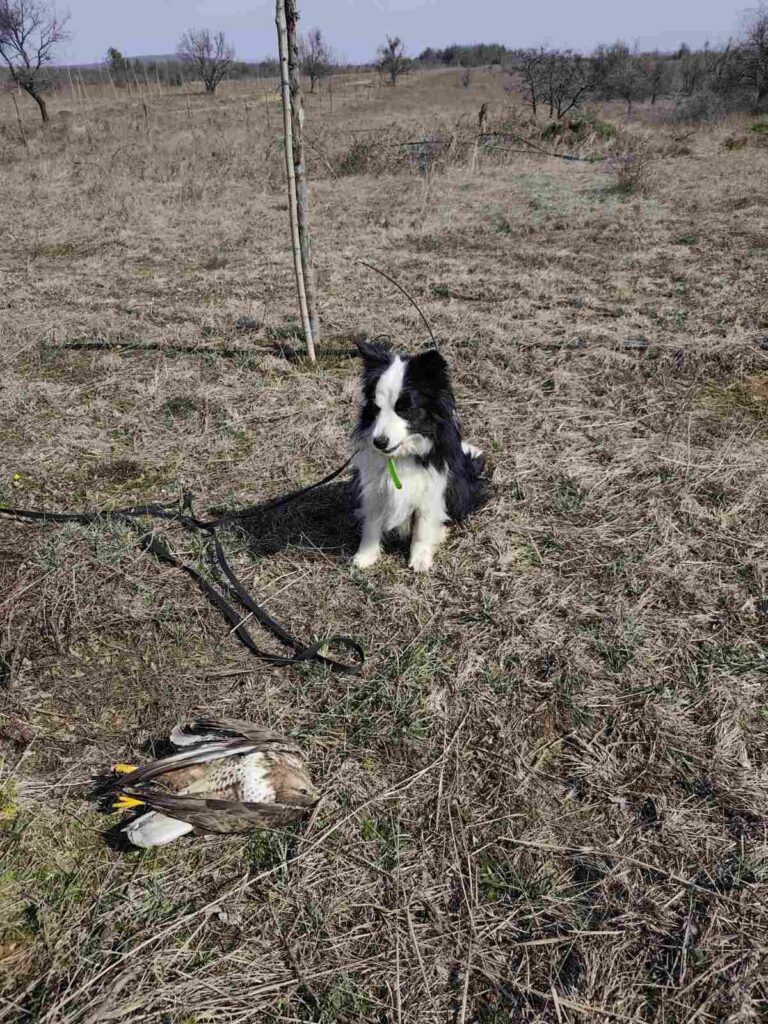
Investigations revealed that the poisoned baits consisted of roe deer carcass parts deliberately placed in the wild to target terrestrial predators. The search operation is ongoing, involving four specialised anti-poison dog units, as well as representatives of conservation organisations, forest services, regional environmental authorities and the hunting federation, which has even announced a €5,000 reward for information about the perpetrators.
Dadia–Lefkimi–Soufli National Park hosts between 36 and 47 breeding pairs of Cinereous Vultures. The colony had begun recovering after devastating wildfires in 2023, thanks to coordinated local and international efforts. The loss of even a few individuals during the breeding season represents a serious blow to the survival of the colony and the conservation of the species in the Balkans.
Cinereous Vultures, like most vulture species, reach sexual maturity only after several years, and each successful pair raises just one chick. Therefore, the loss of adult birds—especially during the breeding season—has a significant impact on the population. The 12 affected vultures represent nearly 10% of the local population—demonstrating how a single criminal act can erase decades of conservation work.
The incident highlights the ongoing threat of illegal poisoning—one of the leading causes of mortality for vultures in Europe. Ongoing efforts under the LIFE Rhodope Vulture project are already improving rapid response capacity and on-site coordination, helping to mitigate the damage.
The project (No. 101148254 — LIFE23-NAT–BG–LIFE Rhodope Vulture) is co-funded by the EU’s LIFE Programme and Rewilding Europe. It aims to restore the Cinereous Vulture population in the Eastern Rhodopes by increasing food availability, reducing human–wildlife conflict, reintroducing birds from Spain to establish a new colony in Bulgaria, and supporting the conservation of the existing Greek colony in Dadia–Lefkimi–Soufli National Park.
